
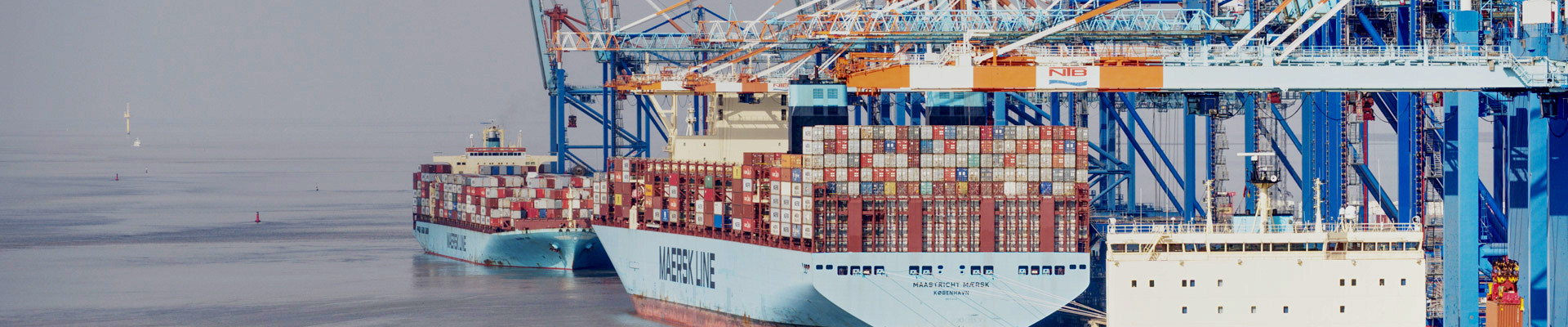


The shipping price gradually returns to a reasonable range
Time:2022-12-29
Views:322
As the traditional peak season of the global container shipping trade, the third quarter of the year saw a sharp decline in shipping freight instead of a high increase. What are the reasons behind this and how do you view the future market trend?
Since 2020, due to the growth of overseas demand, the decline of ship turnover rate, port congestion, logistics congestion and other factors, international container shipping costs have been rising for a time, and the market has been in an "unbalanced" state. Since the beginning of this year, international container shipping charges have been fluctuating from a high level and have rebounded. According to the data of the Shanghai Shipping Exchange, the Shanghai Export Container Freight Index closed at 1306.84 on November 18, 2022, continuing the downward trend since the third quarter. As the traditional peak season of the global container shipping trade, the third quarter of the year saw a sharp decline in shipping freight instead of a high increase. What are the reasons behind this and how do you view the future market trend?
Falling demand affects expectations
At present, the GDP growth of the world‘s major economies has slowed significantly, and the rapid interest rate increase of the US dollar has led to the tightening of global monetary liquidity. Superimposed by the COVID-19 and high inflation, the growth of external demand was sluggish, even began to shrink. At the same time, the challenges faced by domestic economic growth have also increased. The expected strengthening of the global economic recession has brought some pressure on global trade and consumer demand.
From the perspective of product structure, since the epidemic in 2020, the epidemic prevention materials represented by textiles, drugs and medical devices and the consumption of "residential economy" represented by furniture, household appliances, electronic products and entertainment facilities have increased rapidly. In addition, the characteristics of "residential economy" consumer goods, such as low value, large volume and large container use, have once driven the growth of China‘s container exports to a new stage high.
Due to changes in the external environment, the export volume of epidemic prevention materials and "housing economy" products has declined since 2022. Since July, the growth trend of container export value and export volume has even changed in the opposite direction.
From the perspective of inventory in Europe and the United States, in just over two years, the world‘s major buyers, retailers and manufacturers have experienced a process of goods from short supply, global scramble, goods on the road to high inventory. Take the United States as an example, some large retail enterprises, such as Wal-Mart, Best Buy and Target, have serious inventory problems, especially large inventories of televisions, kitchen appliances, furniture and clothing. "High inventory, hard to sell" has become a common problem faced by European and American retail enterprises. This change is inhibiting the import power of buyers, retailers and manufacturers.
From the perspective of exports, from 2020 to 2021, affected by the global spread of the epidemic and China‘s precise and effective prevention and control, China‘s export commodities provided important support for the economic recovery of all countries. China‘s share in the total global commodity exports increased from 13% in 2019 to 15% by the end of 2021. Since 2022, the production capacity of the United States, Germany, Japan, South Korea and Southeast Asia has recovered rapidly in the early stage. In addition to the impact of "decoupling" of some industries, the proportion of China‘s export commodities has begun to decline, which has also indirectly affected the growth of China‘s container export trade demand.
Effective transport capacity is continuously released
While the demand is weakening, the supply of marine transportation is increasing.
The Far East-American West route, as the leader of the global container shipping freight rate, is also an important "choke point" of the global container shipping route. Influenced by such factors as the soaring demand of the United States from 2020 to 2021, the lag of port facilities upgrading and the lack of suitable ship types, the United States ports have experienced serious congestion.
For example, the average number of container ships in Los Angeles Port once exceeded 10 days, and even some single ships queued for more than 30 days. At the same time, the soaring freight rates and strong demand have attracted a large number of ships and boxes from other routes to be put into this route, which has also indirectly exacerbated the tension between supply and demand of other routes, and once triggered the imbalance of "one box is hard to find" and "one cabin is hard to find".
As the demand slows down and the port response becomes more calm, scientific and orderly, the congestion of overseas ports has improved significantly. The global container routes are gradually returning to the original layout, and a large number of overseas empty containers have returned, making it difficult to return to the previous "one container is hard to find" and "one cabin is hard to find" phenomenon.
With the improvement of the imbalance between supply and demand of the main routes, the rate of ship reservation of the world‘s major liner companies has also begun to rise gradually, and the effective capacity of ships has been continuously released. From March to June 2022, affected by the rapid decline in the loading rate of ships on major routes, major liner companies once controlled about 10% of the idle capacity, but did not stop the continuous decline in freight rates.
At the same time, the competitive strategy of shipping enterprises has also begun to differentiate. Some enterprises began to strengthen investment in onshore facilities, acquire some customs brokers and logistics companies, and accelerate digital reform; Some enterprises strengthen the transformation of new energy ships and explore new energy ships powered by LNG fuel, methanol, electricity, etc; Some enterprises continue to increase new shipbuilding orders.
Affected by the recent structural changes in the market, the lack of confidence continued to transmit, and the global container liner freight rates fell rapidly, with the peak of the spot market even falling more than 80%. Carriers, freight forwarders and cargo owners have increasingly strengthened their game on freight. The relatively strong position of the carrier began to compress the profit space of the freight forwarder. At the same time, the spot price and the long-term contract price of some main routes have been inverted, and some enterprises have put forward the claim that they will seek to renegotiate the long-term contract, which may even lead to some violations of the transport contract. However, as a market-oriented agreement, it is not easy to modify the agreement, and even faces huge compensation risks.
What is the future price trend
From the current situation, the decline of container shipping charges may be narrowed in the future.
From the perspective of demand, the demand for container transportation may continue to be depressed due to the tightening of global currency liquidity caused by the acceleration of US dollar interest rate, the decline of consumer demand and expenditure caused by high inflation in Europe and the United States, the high inventory of goods and the reduction of import demand in Europe and the United States. However, the recent rebound of the US consumer information index and the recovery of China‘s exports of small household appliances may narrow the decline in demand.
From the perspective of supply, the congestion of overseas ports will be further alleviated, the efficiency of ship turnover is expected to be further improved, and the delivery speed of transport capacity in the fourth quarter may be accelerated, and the market will face greater oversupply pressure.
However, at present, the main liner companies have begun to prepare a new round of suspension measures, and the effective capacity growth of the market is relatively controllable. At the same time, the Russian-Uzbekistan conflict and the rise of global energy prices have also brought many uncertainties to the future market trend. Overall, the container industry is still in the "ebb" stage in the fourth quarter, and the upward expectation is still lack of strong support. The overall downward pressure of shipping freight may be reduced.
From the perspective of shipping companies, it is necessary to make adequate preparations to cope with the impact of the "ebb tide" in the container industry. Ship investment can be more cautious, better grasp the cyclical impact of current ship value and market freight rate, and choose a better investment opportunity; Pay attention to the new changes in the current RCEP agreement, regional trade, fast shipping and cold chain, better get close to the cargo owners, and improve the "end to end" comprehensive supply chain service capability and competitive advantage; Comply with the current trend of port resource integration, strengthen the integrated development with ports, and promote the coordinated development of trunk and branch. At the same time, we will increase the transformation and upgrading of business digitalization and improve the ability of platform-based management.
From the perspective of cargo owners, we should pay close attention to the changes in overseas consumption structure and strive for more export orders; Properly control the rising cost of raw materials, effectively control the inventory cost of finished products, promote the upgrading and technological innovation of export products, and increase the added value of goods exports; Pay close attention to the national policy support for promoting foreign trade and integrate into the cross-border e-commerce development model.
From the perspective of freight forwarders, we should control the cost of capital, improve our ability to provide logistics services throughout the process, and prevent the supply chain crisis that may be caused by the break of the capital chain.
 123456